
Fire Systems
‘SAFECAF’
Advanced Compressed Air Foam Protection for Machinery
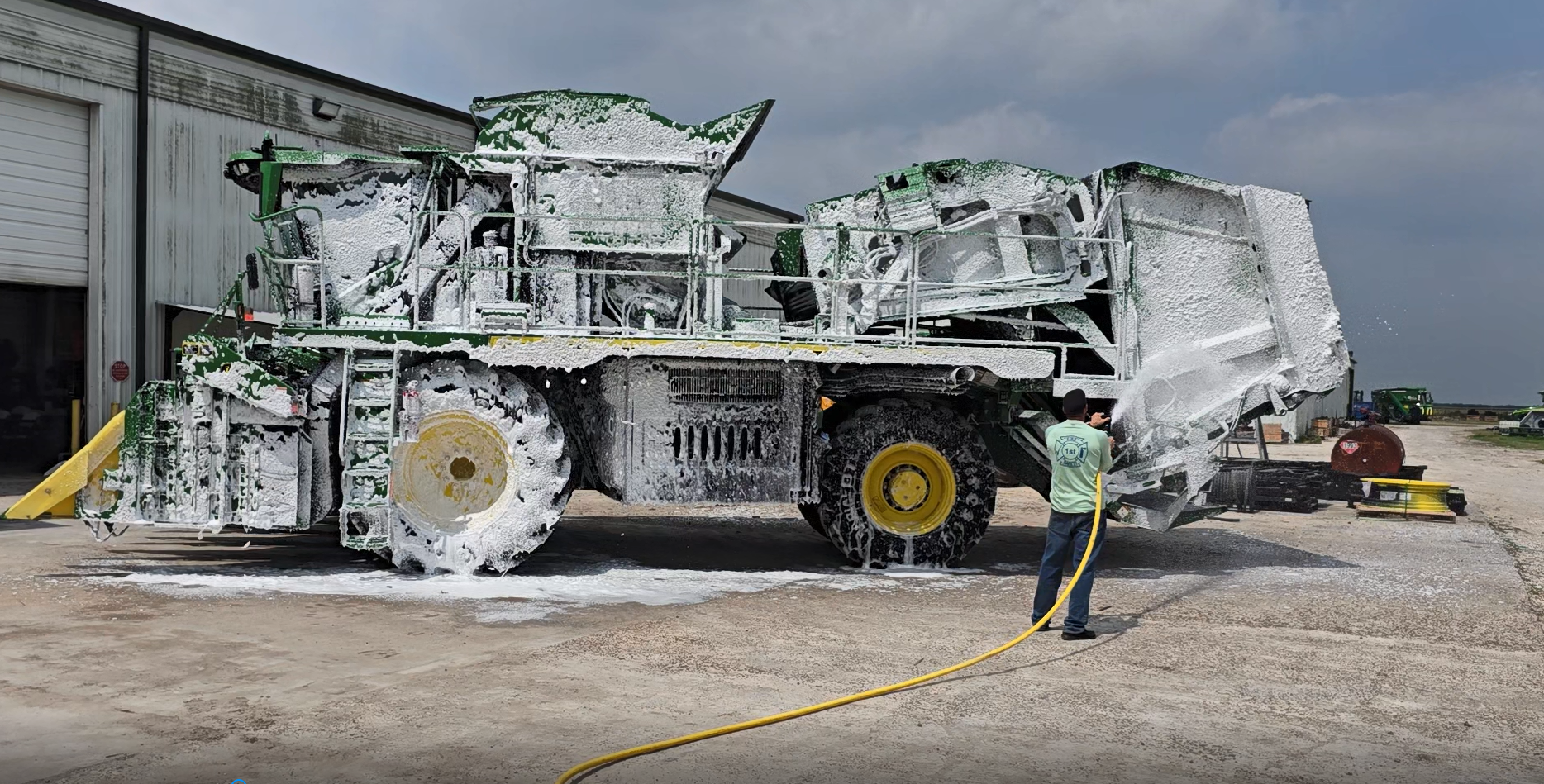
SAFECAF is a compact, highly manoeuvrable fire suppression system engineered for rapid deployment and effective fire control in demanding agricultural and industrial environments. Utilising advanced compressed air foam (CAF) technology, SAFECAF expands foam up to 20 times its original volume, delivering fast knockdown and superior fire suppression performance.
Designed with flexibility in mind, SAFECAF systems are supplied with machine-specific mounting brackets, allowing seamless installation across a wide range of equipment.
-
SAFECAF systems can be configured to suit almost any type of machine. With our in-house custom manufacturing capability, we design and build machine-specific mounting brackets to ensure a secure, practical, and professional installation—no matter the application.
SAFECAF systems have been successfully fitted to a wide range of equipment, including:
John Deere CP/CS690 and CP/CS770
John Deere S780, S680, S770 and X9 harvesters
All tractors (all models)
Case IH combine harvesters (AF, 150 and 250 series)
Claas Lexion 5000–8000 series
Flat-top trays
Shed or yard skid units
…and many more custom applications.
-
Depending on your application, SAFECAF is available in two sizes:
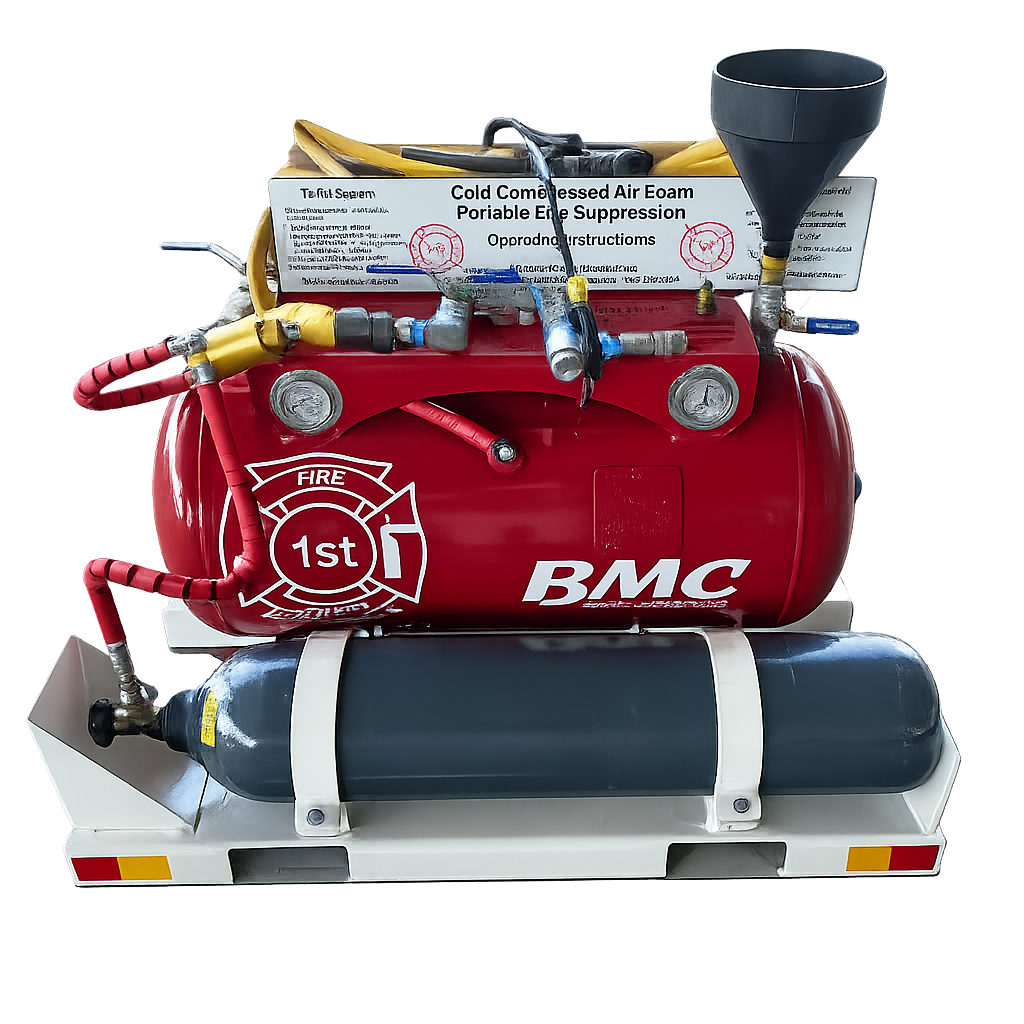
SAFECAF30
A compact solution ideal for smaller platforms and tight installations.
Dimension: 1000 × 500 × 800 mm
Weight (charged): 280 kg
Discharge range: Up to 20 metres at 200 PSI
Supports up to 4 integrated machine nozzles
Delivers approximately 2,250 litres of finished foam
SAFECAF60
Designed for larger machines requiring increased capacity and coverage.
Dimension: 1200 × 600 × 1000 mm
Weight (charged): 460 kg
Discharge range: Up to 20 metres at 200 PSI
Supports up to 8 integrated machine nozzles
Delivers approximately 4,250 litres of finished foam
-
SAFECAF fire suppression systems are available in three configuration levels, allowing the system to be tailored to your operational requirements. Both SAFECAF30 and SAFECAF60 can be configured to suit any level.
Level 1 – Portable Firefighting
A skid-mounted system fitted with a fire hose, providing a standalone and portable solution for manual firefighting.Level 2 – Machine Integrated
The system is fully integrated into the machine, with the valve, fire hose assembly, and nitrogen cylinder relocated outside the cab for improved access. The tank is repositioned for optimal space efficiency and safety.Level 3 – Automated Protection
Building on Level 2, this configuration includes integrated fire nozzles throughout the machine, delivering automatic, comprehensive fire suppression coverage where it’s needed most. -
All SAFECAF systems are designed, built, and installed with real-world operating conditions in mind. Real installation photos and demonstrations are available, and we strongly encourage customers to see SAFECAF in operation to fully appreciate its performance.
Here are a few advantages of the SAFECAF system
-
The first advantage of the SAFECAF system is its simplicity. Much like a fire extinguisher, it operates independently without relying on electrical systems or hydraulics. It is a self-contained, low-maintenance system designed to deliver consistent and effective firefighting performance day after day. Its self-contained design allows the SAFECAF system to be relocated and installed on different machines with minimal setup.
-
The second advantage of the SAFECAF system is its exceptional weight-to-output ratio. For instance, the SAFECAF30 weighs only 280 kg yet produces more than 2,400 litres of solid foam at 200 PSI. This enables a rapid and powerful response in the event of a fire. For applications where additional weight capacity is available—such as trailers, tractors or chaser bins—the larger SAFECAF60 model offers even greater performance. Weighing 450 kg, it delivers an impressive 4,600 litres of solid foam at 200 PSI, providing extended coverage and superior firefighting capability.
-
The third advantage of the SAFECAF system combines the benefits of its self-contained and lightweight design. Because the system can be mounted directly onto harvesters, operators have immediate firefighting capability on the machine itself. Traditionally, if a fire occurred, operators had to rush to a support vehicle or water truck. With the SAFECAF system installed on the harvester, you can respond instantly, minimizing damage and preventing escalation. This is especially critical given the extensive wiring harnesses and sensors found in modern machinery, where even a small smoulder can quickly immobilize the machine. With SAFECAF, you no longer need to rush to the water truck — you are the water truck.
-
The final advantage of the SAFECAF system lies in the foam it produces. There are three key characteristics that make our firefighting foam exceptionally effective for machinery protection:
Versatility: It carries an AB rating, meaning it is suitable for both Class A (solid) and Class B (liquid) fires.
Enhanced Performance: It contains a fire-retardant surfactant that improves penetration, spread, and adhesion, allowing the foam to effectively smother and cool hot surfaces.
High Efficiency: The foam includes a powerful encapsulating agent that increases heat absorption and prevents re-oxygenation, helping to stop re-ignition.
Equally important is what the foam does not contain — it is non-toxic, non-corrosive, and non-carcinogenic, and completely free of PFOS, making it safer for both operators and the environment.
Introducing FireWatch
Thermal Detection Cameras (FireWatch)
The FireWatch Thermal Detection System is an engineered modification designed for installation on agricultural and industrial machinery to provide early-stage fire detection and enhanced operational safety.
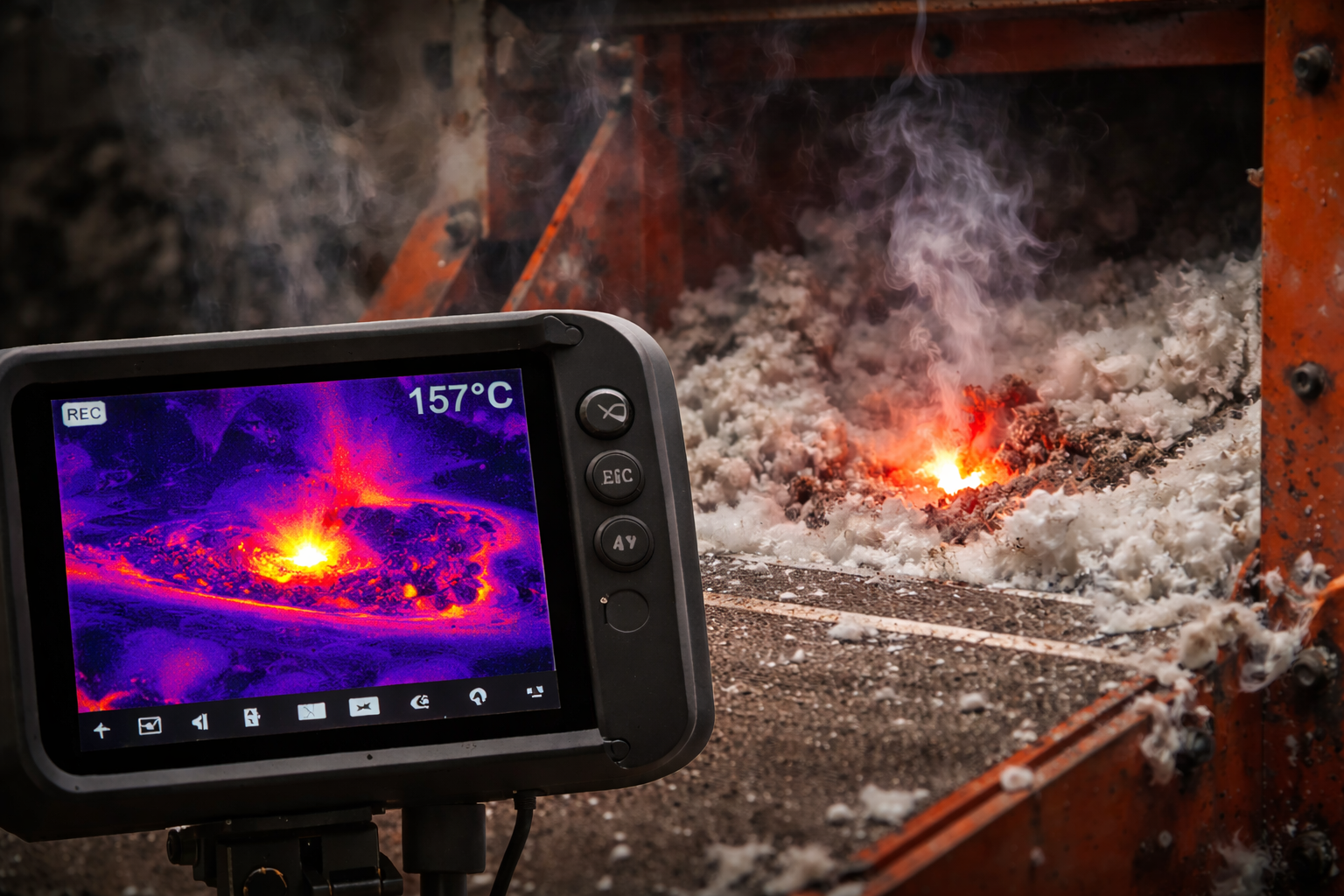
The system utilises one or more high-sensitivity infrared thermal imaging cameras strategically mounted in designated high-risk areas of the machine. These cameras continuously monitor thermal activity in real time, detecting abnormal heat signatures associated with smouldering material, active fires, friction events, or mechanical failures such as bearing overheating.
When preset temperature thresholds are exceeded, the system immediately alerts the operator via audible and visual alarms, enabling rapid intervention to mitigate escalation, reduce damage, and minimise downtime.
Rapid Early-Stage Detection The FireWatch Advantage
The primary advantage of the FireWatch system is its rapid thermal detection capability. Because the system utilises high-sensitivity infrared imaging rather than conventional heat sensors, it can instantly identify abnormal heat signatures exceeding preset temperature thresholds and immediately alert the operator.
In many cases, machine fires begin as small smoulders, overheated bearings, friction events, or failed mechanical components. Left undetected, these minor thermal events can escalate into fully developed fires. Traditionally, detection only occurs once flames or heavy smoke are visible — at which point significant machinery damage has already occurred.
By contrast, FireWatch monitors known high risk areas and identifies elevated thermal activity at its earliest stage. As soon as a smoulder or abnormal heat source is detected, the system triggers audible and visual alarms inside the cab, allowing the operator to shut down systems, exit the machine if required, and respond before escalation.
Early intervention dramatically reduces:
Machinery damage
Component replacement costs
Operational downtime
Risk to operator safety
FireWatch shifts fire response from reaction to prevention — detecting issues before they become catastrophic events.
FireWatch in action
In this video, the FireWatch system is installed on a CP770 cotton picker. See for yourself just how quickly FireWatch detects even the smallest smoulders — providing operators with immediate early warning before a minor thermal event escalates into a major fire.